 No matter how you look at it, and even if it's stock hit a new 52-week low today, Apple is still the world's most admired
company, bar none, at least in the eyes of executives interviewed by Fortune magazine.
For the 6th straight year in a row, Apple took home the top honors for the title, this year scoring 8.24 on Fortune's
ranking point system, ahead of Google with a score of 8.01, and Amazon with 7.28. Overall, Apple was deemed the most admired
corporation, despite recent concerns over the company's performance and even after the fact that it's losing some affection
from Wall Street.
Its stock has dropped over 34.9 percent since September as investors and industry analysts are worried that Apple's best
days may be behind it. Of course, not everyone agrees on that view.
According to Fortune's description-- "Apple has had a tough time lately with its stock price in a free fall and the widely
publicized failure of its Maps feature. But it still remains a very healthy company, posting $13 billion in net income last
quarter, making it the most profitable company in the world during that period."
"The company has its fanatical customer base, and it still refuses to compete on price, making the iconic iPhone and iPad
products that are still widely seen as prestige devices. Competition may be stiff, but so far it remains behind: In Q4 2012,
the iPhone 5 was the world's best selling smartphone, followed in second place by the iPhone 4S," added Fortune Magazine.
No matter how you look at it, and even if it's stock hit a new 52-week low today, Apple is still the world's most admired
company, bar none, at least in the eyes of executives interviewed by Fortune magazine.
For the 6th straight year in a row, Apple took home the top honors for the title, this year scoring 8.24 on Fortune's
ranking point system, ahead of Google with a score of 8.01, and Amazon with 7.28. Overall, Apple was deemed the most admired
corporation, despite recent concerns over the company's performance and even after the fact that it's losing some affection
from Wall Street.
Its stock has dropped over 34.9 percent since September as investors and industry analysts are worried that Apple's best
days may be behind it. Of course, not everyone agrees on that view.
According to Fortune's description-- "Apple has had a tough time lately with its stock price in a free fall and the widely
publicized failure of its Maps feature. But it still remains a very healthy company, posting $13 billion in net income last
quarter, making it the most profitable company in the world during that period."
"The company has its fanatical customer base, and it still refuses to compete on price, making the iconic iPhone and iPad
products that are still widely seen as prestige devices. Competition may be stiff, but so far it remains behind: In Q4 2012,
the iPhone 5 was the world's best selling smartphone, followed in second place by the iPhone 4S," added Fortune Magazine.
In a related story on the company titled "It's lonely at the top
for Apple," senior editor-at-large Adam Lashinsky did
acknowledge concerns over the stock price and post-Steve Jobs
management. But Apple has gotten to the point where people expect
miracles from the company, he wrote.
And it seems that when Apple doesn't deliver those miracles, investors and analysts give the company the thumbs down.
To be sure, Apple's corporate peers obviously see the current struggles as a short-term blip and continue to believe in the
company's long-term potential.
But one question raised by Fortune is whether the "most admired"
title is a true sign of Apple's value. "Perhaps the admiration
of one's peers is a lagging indicator, akin more to a hall-of-fame
vote than to a most-valuable-player award," Lashinsky wrote.
"The company whose late founder aimed for it to be 'insanely great' still remains damn good, and by any standards. The years
to come will determine if for Apple, that's good enough," he added.
Beyond Google and Amazon, other tech players among the top 50 included IBM, Microsoft, Samsung, Intel, eBay, Facebook, and
Cisco Systems.
Fortune's list of the world's most admired companies is based on
surveys from executives across 30 different countries.
The companies are ranked on nine separate criteria, including the
quality of management, innovativeness, the quality of products
or services, the ability to attract and retain talented people, social
responsibility, and long-term investment value.
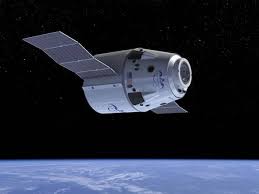 The glitch that stalled the private Dragon spacecraft's cargo delivery
to the International Space Station today gave its handlers quite a jolt.
SpaceX's unmanned Dragon capsule launched smoothly into orbit this morning (March 1), but its thrusters failed to fully activate
after the spacecraft separated from its Falcon 9 rocket. Just one of
four thruster "pods" was working normally at first, imperiling SpaceX's
second contracted supply flight for NASA.
"It was a little frightening there," SpaceX founder and CEO Elon Musk told reporters in a mission update today.
The glitch that stalled the private Dragon spacecraft's cargo delivery
to the International Space Station today gave its handlers quite a jolt.
SpaceX's unmanned Dragon capsule launched smoothly into orbit this morning (March 1), but its thrusters failed to fully activate
after the spacecraft separated from its Falcon 9 rocket. Just one of
four thruster "pods" was working normally at first, imperiling SpaceX's
second contracted supply flight for NASA.
"It was a little frightening there," SpaceX founder and CEO Elon Musk told reporters in a mission update today.
At least three of the four pods must be firing nominally for Dragon to
be cleared to approach the orbiting lab, NASA officials said. A more
immediate concern, however, was Dragon's initial orbit, which brought
the capsule to within about 120 miles (200 kilometers) of Earth's
surface at "perigee," its closest point.
"If we left it at this orbit without raising perigee, it would re-enter within a day or two," Musk said.
But the outlook has improved since the first few minutes after launch.
SpaceX engineers have now brought all four pods online and executed an
orbit-raising burn, Musk reported via Twitter, potentially clearing the
way for an eventual space station rendezvous.
"Orbit raising burn successful. Dragon back on track," Musk write in a Twitter post today.
If everything goes swimmingly from here on out, berthing could occur as
early as Sunday (March 3), NASA officials said — a day later than
called for in the original plan.
The thruster issue was the first glitch Dragon has suffered in four
trips to space. The capsule performed pretty much flawlessly on a test
flight to Earth orbit and back, a historic demonstration mission to the
space station in May 2012 and its first contracted cargo run to the
orbiting lab last October.
So Musk isn't too concerned about Dragon's prospects going forward.
"I think it's an anomaly," he said. "I think it was a glitch of some
kind and not a serious thing if we're able to come back online."
SpaceX holds a $1.6 billion deal with NASA to make 12 robotic cargo flights to the space station. The Dragon capsule
is carrying 1,200 pounds (544 kilograms) of scientific experiments and
supplies to the orbiting lab and is slated to bring 2,300 pounds (1,043
kg) of material back down to Earth.
Dragon was originally supposed to come home March 25, but the mission's
timeline remains up in the air until the thruster glitches are
definitively sorted out and Dragon is cleared to dock with the station.
Follow SPACE.com
 No matter how you look at it, and even if it's stock hit a new 52-week low today, Apple is still the world's most admired
company, bar none, at least in the eyes of executives interviewed by Fortune magazine.
No matter how you look at it, and even if it's stock hit a new 52-week low today, Apple is still the world's most admired
company, bar none, at least in the eyes of executives interviewed by Fortune magazine.

